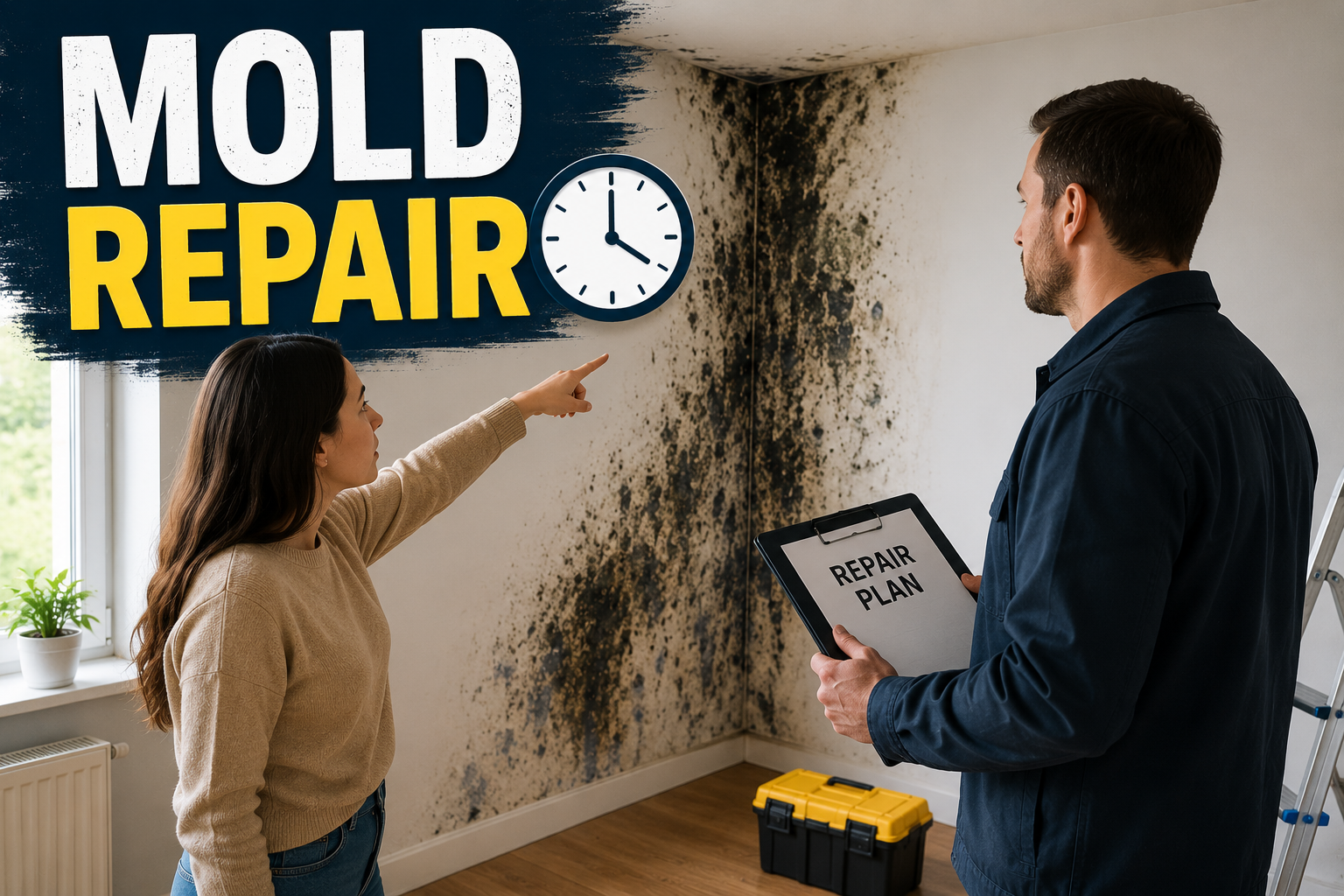
There’s no single federal deadline for fixing mold, but most states expect landlords to address it within a “reasonable” time, which courts and housing codes generally treat as somewhere between 3 and 30 days depending on how serious the problem is. A small bathroom mold spot tied to a leaky pipe might fall on the shorter end, while a major infestation affecting air quality or structural areas often triggers faster action because it threatens habitability. The exact clock depends on your state’s landlord-tenant law, your lease terms, and how you reported the issue.
How long does a landlord have to fix mold?
Landlords generally must address mold within a reasonable time after being notified, typically interpreted as 3 to 30 days depending on the severity and the state. States that spell out a specific number tend to use 14 or 30 days for non-emergency repairs, while mold connected to an active leak or sewage issue is usually treated as urgent and expected to be addressed within days, not weeks.
“Reasonable time” sounds vague because it is, by design. Lawmakers wrote it that way so the standard could flex based on context: a tiny mold spot on a windowsill from condensation doesn’t carry the same urgency as black mold spreading across a bedroom wall. What stays constant is that the clock starts when you actually notify your landlord, not when the mold first appeared, so how and when you report it matters as much as the mold itself.
Why mold falls under habitability law
Most states require landlords to maintain a “habitable” home under what’s called the implied warranty of habitability. This is a baked-in legal obligation that exists whether or not your lease mentions it, and it generally covers things like working plumbing, safe electrical systems, and protection from mold caused by moisture problems the landlord is responsible for fixing.
Mold tied to a structural issue, like a roof leak, plumbing failure, or poor ventilation the landlord installed, usually counts as a habitability problem. Mold caused by something the tenant did, like never running a bathroom fan or letting wet towels pile up for weeks, is a murkier situation, and landlords sometimes point to tenant behavior to push back on responsibility. Documenting the likely source of the moisture early on can matter a lot here.
Typical repair timelines by situation
| Situation | Typical expected response time | Why |
|---|---|---|
| Active leak causing mold growth | 24–72 hours to address the leak; mold remediation soon after | Ongoing water damage worsens daily and can affect structural areas |
| Mold from a one-time event (spill, prior flood) | 7–14 days | Less urgent once the moisture source is controlled |
| Small surface mold (bathroom tile, window seal) | 14–30 days | Lower health risk, often resolved with cleaning rather than remediation |
| Mold affecting HVAC or large wall/ceiling areas | As soon as possible, often treated as an emergency | Can spread through air systems and affect the whole unit |
| Mold tenant may have caused (poor ventilation habits) | Varies — landlord may dispute responsibility | Often requires negotiation or documentation of cause |
These ranges reflect common practice and how courts tend to interpret “reasonable time,” not a fixed number you can cite in every state. Some states, including California and Illinois, have specific repair-timeline statutes worth checking directly if you want an exact legal number for your situation.
What to do if your landlord isn’t fixing the mold
- Report it in writing. A text or emailed photo works, but a dated letter sent by certified mail creates the strongest record of exactly when you notified your landlord.
- Keep documentation. Photos with timestamps, any health symptoms you’ve noticed, and copies of all communication help if the dispute escalates.
- Check your local housing code. Many cities have their own health and safety codes that go further than state law and may include city-specific inspection requests.
- Request a habitability inspection. Many local housing departments will send an inspector to document code violations, which adds outside verification to your claim.
- Know your escalation options. Depending on your state, these can include repair-and-deduct (paying for the fix yourself and subtracting it from rent), rent withholding, or breaking the lease early due to constructive eviction — each comes with specific legal requirements, so don’t attempt these without confirming your state allows them first.
- Consult a tenant rights organization or attorney if the landlord ignores repeated written requests. Many areas have free or low-cost legal aid for habitability disputes.
When mold becomes a legal emergency
Some situations move mold from “needs fixing soon” to “needs fixing now” in the eyes of housing law:
- Mold combined with no functioning ventilation or air conditioning in extreme weather
- Visible black mold (often Stachybotrys) in living spaces
- A tenant or family member with a documented respiratory condition, asthma, or mold allergy
- Mold spreading from a sewage backup or contaminated water source
In these cases, many tenants have grounds to request emergency repairs, and some local codes allow tenants to call code enforcement directly rather than waiting on the landlord’s own timeline.
Frequently asked questions
Is there a federal law that sets a mold repair deadline? No. There’s no federal statute specifying mold timelines. Repair deadlines come from state landlord-tenant law, local housing codes, or sometimes the lease itself.
Can I withhold rent if my landlord won’t fix mold? In many states, yes, but only after following specific legal steps like written notice and waiting a set period. Withholding rent incorrectly can expose you to eviction risk, so check your state’s exact requirements first.
What counts as proper notice to my landlord about mold? Written notice — text, email, or letter — that clearly describes the mold’s location and asks for repair. Verbal-only requests are harder to prove later if a dispute arises.
Does my landlord have to test the mold or just clean it? Most states don’t require formal mold testing. Landlords are generally expected to fix the underlying moisture source and remediate visible mold, not necessarily lab-test the species.
Can I break my lease because of mold? Sometimes, under a legal theory called constructive eviction, if the mold makes the unit genuinely unlivable and the landlord fails to fix it after proper notice. This usually requires documentation and, in many states, formal legal steps before moving out.
Is my landlord responsible for mold I may have caused? It depends on the cause. If the mold stems from tenant behavior, like consistently blocking ventilation, landlords may have a stronger argument that it’s the tenant’s responsibility, though this is often disputed case by case.
Bottom line
There’s no nationwide mold deadline, but “reasonable time” generally lands somewhere between a few days for urgent leaks and about 30 days for minor surface mold, with your state’s housing code and your written notice setting the real clock. If your landlord is dragging their feet past that window, documenting everything and checking your local housing code is the strongest next step before considering rent withholding or other escalation.
This article is for general information and isn’t legal advice. Habitability and mold rules vary significantly by state and city, so check your local housing code or talk to a tenant rights attorney about your specific situation.