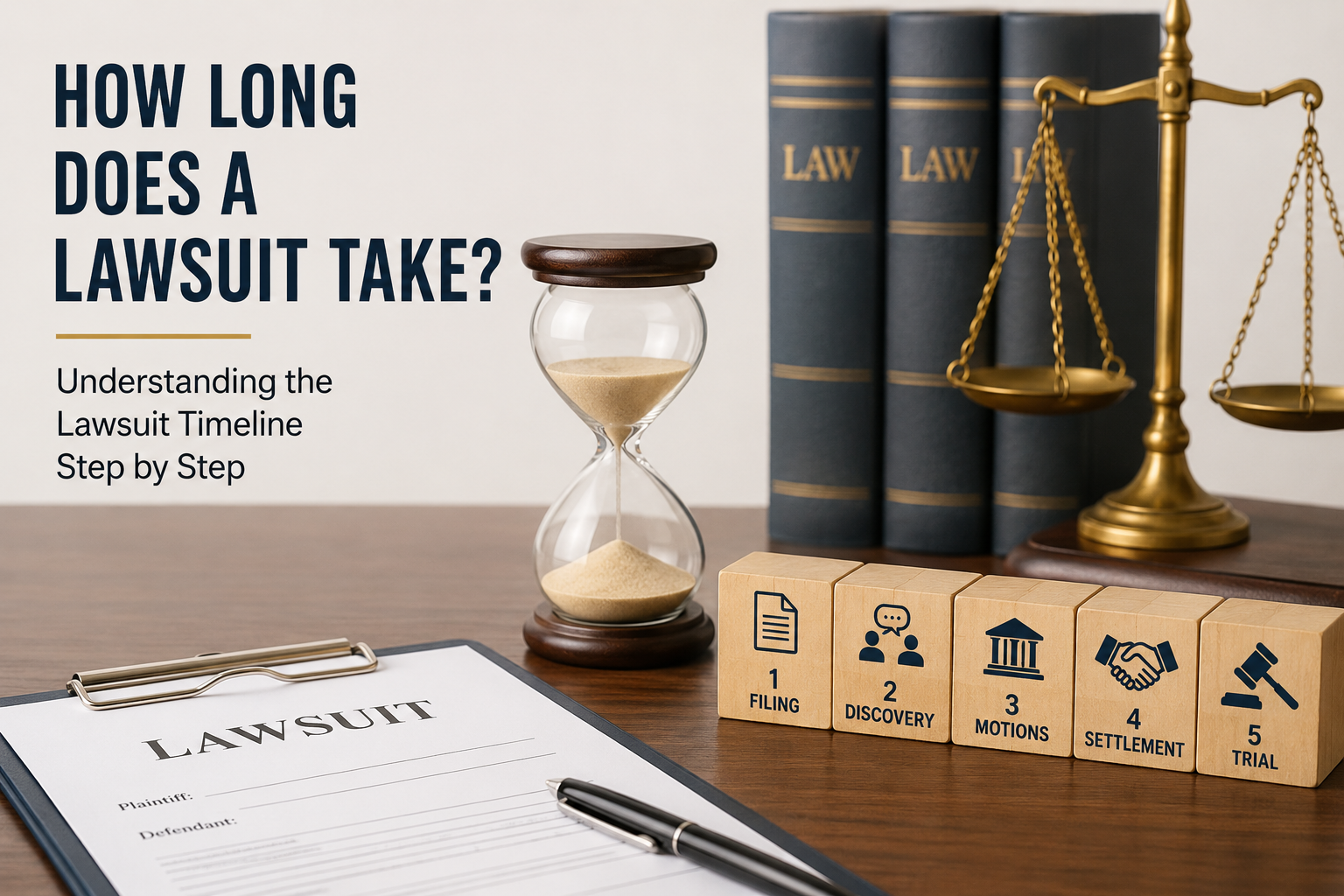
Most civil lawsuits in the United States take between one and three years from filing to resolution, though simple cases can wrap up in a few months and complex ones can drag on for five years or more. The exact timeline depends on the type of case, the court’s backlog, and whether the parties settle before trial.
If you’re staring down a lawsuit, either one you’re filing or one filed against you, “how long is this going to take” is usually the second question on your mind, right after “how much is this going to cost.” Nobody can hand you an exact number on day one. But once you know what actually eats up the time, you can get a realistic range instead of just guessing.
What Determines How Long a Lawsuit Takes
A handful of factors decide whether your case moves in months or drags into years.
- Court backlog. Some counties and districts have far more cases than judges. A courthouse with a heavy docket can add months just waiting for a hearing date.
- Case complexity. A straightforward breach of contract with clear documentation moves faster than a case involving multiple parties, expert witnesses, or disputed facts.
- Whether the case settles. Most civil lawsuits never reach trial. They settle somewhere along the way, and a settlement reached early can cut the timeline dramatically.
- Discovery disputes. If one side drags out producing documents or fights every deposition request, discovery alone can stretch a year or longer.
- State vs. federal court. Federal courts often run on tighter, more standardized schedules than state courts, though this varies a lot by district.
- Appeals. If either side appeals after a verdict, add another one to two years before the case is truly finished.
The Stages of a Lawsuit and How Long Each One Takes
Breaking the process into stages makes the timeline easier to picture. These ranges assume a typical civil case that doesn’t settle immediately and isn’t unusually complicated.
| Stage | Typical Timeframe |
|---|---|
| Filing the complaint | 1 day |
| Serving the defendant | 1-3 months |
| Defendant’s response (answer or motion to dismiss) | 3-6 weeks after service |
| Discovery (exchanging evidence, depositions) | 6 months to 2 years |
| Pretrial motions | 2-6 months |
| Settlement negotiations | Can happen at any point, often right before trial |
| Trial | 1 day to several weeks, depending on complexity |
| Appeal (if filed) | 1-2 years |
Discovery is usually the stage that surprises people most. It’s when both sides gather evidence, take depositions, and answer written questions called interrogatories. In a case with multiple witnesses or technical evidence, discovery alone can eat up more time than every other stage put together.
Why Most Cases Settle Before Trial
The vast majority of civil lawsuits never see a jury. Settlement talks often pick up once both sides have gone through discovery and have a clearer sense of how strong, or weak, the other side’s evidence actually is. A case that looked unpredictable at filing can suddenly look much more settleable once the depositions are done and everyone knows what the witnesses will actually say under oath.
How Long Does a Small Lawsuit Take Compared to a Big One?
Small claims court cases, where the dollar amount is capped (often somewhere between $2,500 and $25,000 depending on the state), are built to move fast. Many small claims cases get a hearing date within 30 to 90 days of filing, and the hearing itself often wraps up in a single session because there’s no formal discovery process and usually no attorneys involved.
Larger civil cases in regular trial court don’t have that built-in speed. They go through full discovery, motion practice, and often a multi-day trial, which is exactly why they take so much longer.
What Can Speed Up or Slow Down Your Case
A few practical things actually move the needle on timing:
- Responding to discovery requests quickly keeps the case moving instead of giving the other side an excuse to file motions to compel.
- Being open to mediation can resolve a case in weeks instead of years, especially once both sides see the strength of the other’s evidence.
- Filing in a court with a lighter docket, when you have a choice of venue, can shave months off the wait for hearing dates.
- Avoiding unnecessary motions keeps the pretrial phase from ballooning. Every motion filed needs to be briefed, argued, and ruled on, and that takes calendar time.
On the flip side, anything that adds parties, adds claims, or adds disputes over evidence will almost always add months.
This article explains general timelines and isn’t legal advice for your specific case. Court schedules, local rules, and case specifics vary enough that the only way to get a real estimate for your situation is to ask the attorney handling it or check with the court clerk’s office directly.
Frequently Asked Questions
How long does a civil lawsuit take on average? Most civil lawsuits take one to three years from filing to resolution, though simple cases can resolve in months and complex ones can take much longer.
How long does it take to get a court date after filing a lawsuit? It varies widely by court, but an initial hearing or case management conference is often scheduled within a few months of filing, while a full trial date can be a year or more out.
Does settling a case make it faster? Yes. A case that settles early, before extensive discovery, can resolve in a matter of months instead of years.
Why does discovery take so long? Discovery involves exchanging documents, answering written questions, and taking depositions, and any disputes over what must be produced can add months of delay.
How long does small claims court take? Small claims cases typically get a hearing within 30 to 90 days of filing and are usually resolved in a single court session.
Can a lawsuit take more than five years? Yes, particularly in complex cases involving multiple parties, extensive discovery disputes, or an appeal after trial.