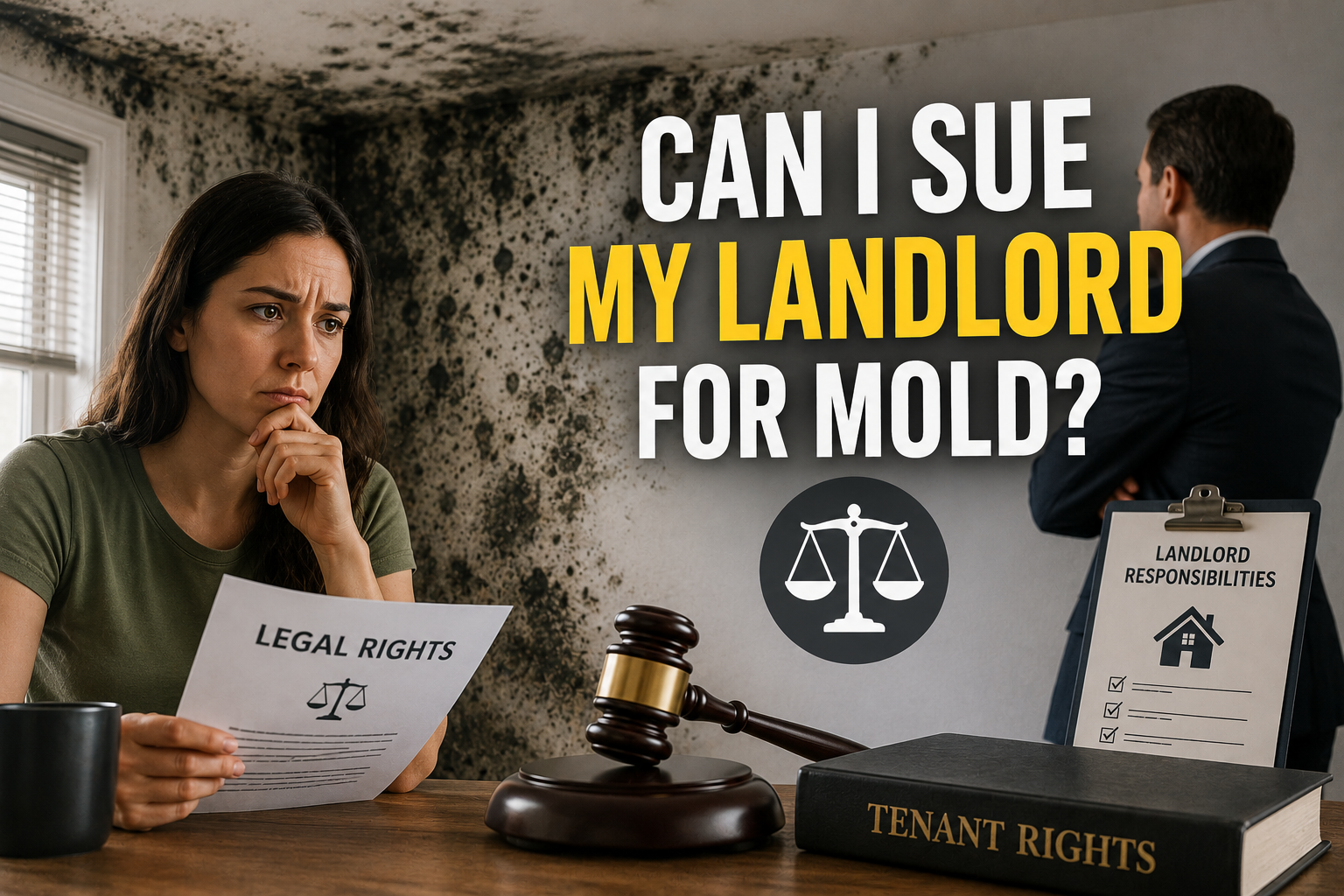
Yes, you can sue your landlord for mold, but only if you can show the landlord knew about the problem, failed to fix it within a reasonable time, and that failure caused you actual harm, like property damage, medical expenses, or a health condition made worse by exposure. A mold spot you never reported, or one your landlord fixed promptly after you flagged it, generally won’t support a lawsuit. The strength of your case comes down to documentation: what you reported, when, and what happened as a result.
Can I sue my landlord for mold?
You can sue your landlord for mold if you can prove three things: the landlord knew or should have known about the mold, they failed to address it within a reasonable time after notice, and that failure caused you measurable harm. Courts generally won’t side with a tenant who never told the landlord about a problem, or who sues immediately after reporting it without giving any time to respond.
The legal basis for most of these cases is the implied warranty of habitability, a built-in obligation in nearly every state requiring landlords to keep rental units safe and livable, whether or not the lease specifically mentions mold. When mold stems from a moisture problem the landlord is responsible for, like a leaking roof or broken pipe, and the landlord doesn’t fix it after being notified, that’s usually where a habitability claim takes shape.
What you need to prove
The landlord knew about the mold
This is usually the easiest piece to establish, and also the most important. A text message, email, or dated letter describing the mold and asking for repair creates a paper trail showing exactly when the landlord became aware. Verbal-only complaints are harder to prove later, since it becomes your word against theirs about whether you ever actually said anything.
The landlord failed to respond within a reasonable time
“Reasonable” varies by state and by how serious the mold is. A landlord who fixes a leak and remediates mold within a couple of weeks of being notified has likely met their obligation, even if the process was inconvenient. A landlord who ignores written requests for months, despite worsening mold, is in much weaker legal territory.
You suffered actual, provable harm
This is where many potential cases fall apart. Courts generally want to see harm, not just inconvenience. Common categories include:
- Property damage — furniture, clothing, or belongings ruined by mold growth
- Medical costs — doctor visits, medication, or treatment tied to mold-related symptoms, ideally with a doctor’s note connecting the two
- Relocation costs — if the unit became unlivable and you had to move out before your lease ended
- Diminished use of the rental — sometimes courts award partial rent reimbursement for the period the unit was substandard
A doctor’s note that simply says “patient reports mold exposure” is weaker than one that documents specific symptoms, a treatment plan, and a professional opinion connecting the two. The same goes for property damage: photos with timestamps and, where possible, receipts for replaced items make a real difference.
Where these cases get filed
| Claim type | Typical venue | Best for |
|---|---|---|
| Reimbursement for damaged property, moving costs, or partial rent (smaller dollar amounts) | Small claims court | Tenants representing themselves without an attorney |
| Larger claims involving significant medical costs or property damage | Civil court (county or district level) | Cases likely to need expert testimony or larger damages |
| Mold tied to a fire, flood, or major structural failure | Civil court, sometimes alongside an insurance claim | Cases involving multiple parties or large losses |
Small claims court has a dollar limit that varies by state, often somewhere between $5,000 and $25,000. If your damages fall under that limit, small claims is usually faster, cheaper, and doesn’t require a lawyer. Larger claims typically need to go through standard civil court.
Steps to take before filing a lawsuit
- Notify your landlord in writing, describing the mold’s location and requesting repair. Keep a copy.
- Document everything — dated photos, copies of all written communication, any medical records, and receipts for damaged property.
- Request a housing inspection through your local code enforcement office if the landlord doesn’t respond. An inspector’s report adds independent verification to your case.
- Send a formal demand letter outlining what you’re asking for (repair, reimbursement, or both) and a deadline to respond. Many disputes resolve at this stage without ever reaching court.
- Consider mediation if your area offers a landlord-tenant mediation program — it’s often faster and cheaper than a lawsuit and can preserve the relationship if you’re staying in the unit.
- File in the appropriate court if the landlord doesn’t respond adequately, choosing small claims or civil court based on the dollar amount involved.
What you can typically recover
If you win, common remedies include reimbursement for property damage, medical expenses tied to mold exposure, partial rent refunds for the period the unit wasn’t fully habitable, and in some cases, the cost of temporary relocation. Punitive damages are less common in mold cases unless the landlord’s conduct was especially reckless, such as ignoring repeated complaints about a known health hazard.
Frequently asked questions
Do I need a lawyer to sue my landlord for mold? Not necessarily for small claims court, which is designed for self-representation. Larger claims involving significant medical costs are usually stronger with an attorney.
How long do I have to sue my landlord for mold? This depends on your state’s statute of limitations for property damage or personal injury claims, which often ranges from one to several years. Don’t wait to find out — start documenting and acting promptly.
What if I never reported the mold to my landlord? This significantly weakens a claim. Landlords are generally only responsible once they had notice and a reasonable chance to fix the problem.
Can I sue for emotional distress caused by mold? It’s possible in some states, but emotional distress claims are harder to prove than physical property damage or documented medical costs, and usually need expert or medical support.
What if my landlord says the mold is my fault? Landlords sometimes argue mold resulted from tenant behavior, like poor ventilation. Documentation showing the moisture source (a leak, plumbing issue, etc.) helps counter this argument.
Is mold testing required to sue my landlord? No, but a professional mold assessment or inspection report can strengthen your case by independently confirming the extent and likely cause of the problem.
Bottom line
A mold lawsuit against your landlord has a real chance of succeeding when you can show clear notice, a failure to fix the problem in a reasonable time, and actual documented harm. Before filing anything, put your complaint in writing, gather your evidence, and send a formal demand letter — many of these disputes get resolved before they ever reach a courtroom. If you do end up filing, understanding how long a lawsuit typically takes can help you set realistic expectations for the process ahead.
This article is for general information only and isn’t legal advice. Habitability laws, filing deadlines, and court procedures vary by state, so talk to a licensed attorney or your local tenant rights organization about your specific situation.