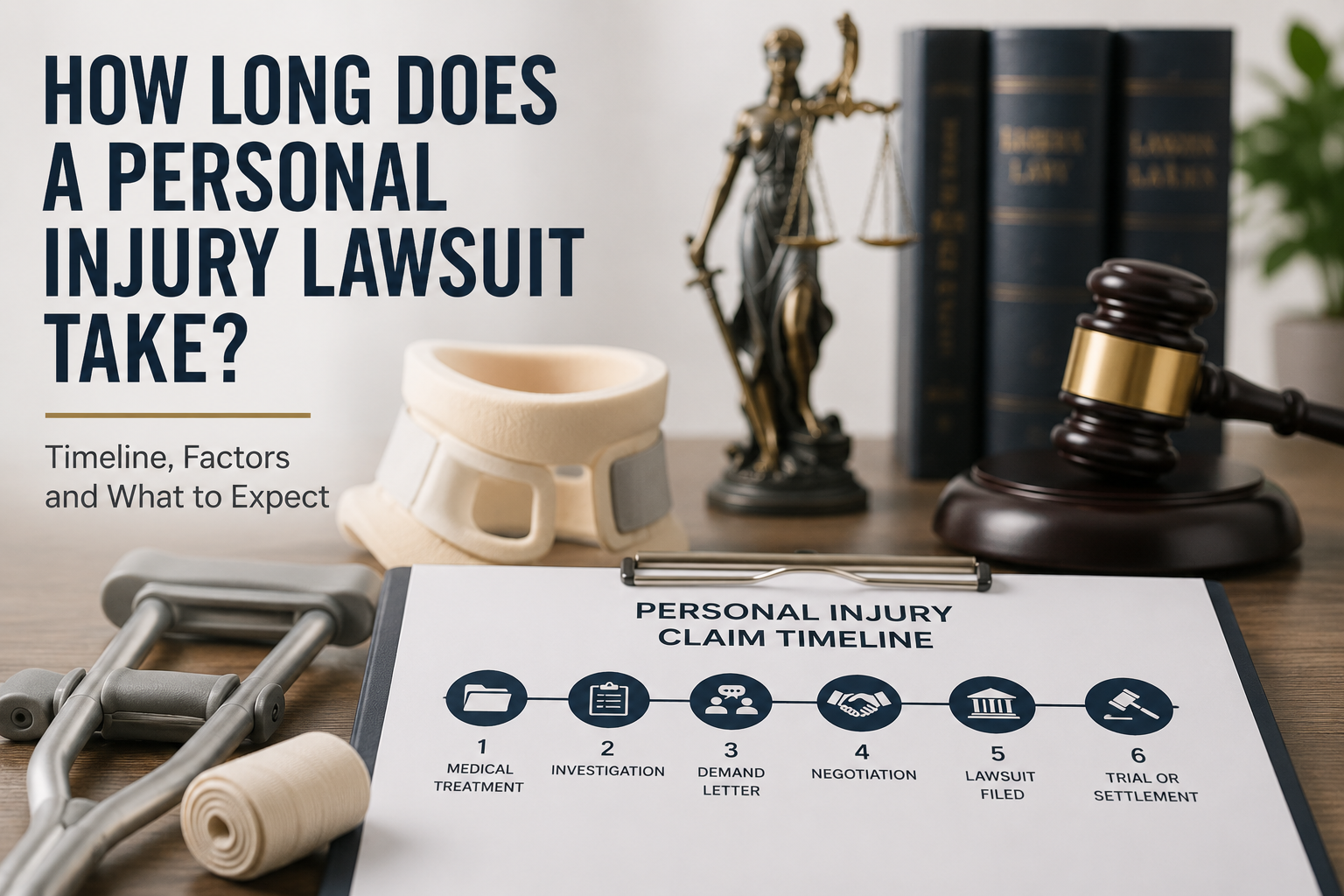
Most personal injury lawsuits take between one and two years from filing to resolution, though straightforward cases that settle early can wrap up in under a year, and complicated ones involving serious injuries or disputed liability can stretch past three years. The biggest factor isn’t the courthouse calendar. It’s how long it takes the injured person to finish medical treatment, since most attorneys won’t push for a settlement until they know the full cost of the injury.
If you’ve just filed a personal injury claim, or you’re thinking about it, the waiting is often the hardest part. You’re dealing with medical bills, maybe missed work, and a case that seems to move at its own pace regardless of what you need. Here’s what actually drives that timeline, stage by stage.
Why Personal Injury Cases Take As Long As They Do
Personal injury cases follow the same basic court process as other civil lawsuits, but a few things specific to injury claims tend to stretch them out:
- Medical treatment has to finish first. Settling before you’ve reached “maximum medical improvement” means settling for less than the case might be worth, since future treatment costs get baked into the settlement number.
- Liability is often disputed. If the other side argues you were partly at fault, or argues there was no negligence at all, that dispute has to get resolved before a real settlement number is possible.
- Insurance companies negotiate slowly on purpose. Delay tends to favor the insurer, especially if the injured person needs money and might accept a lower offer out of financial pressure.
- Severity of the injury. A minor fender-bender claim moves faster than a case involving long-term disability, surgery, or a wrongful death claim.
Timeline: From Filing to Settlement or Trial
| Stage | Typical Timeframe |
|---|---|
| Filing the complaint | 1 day |
| Serving the defendant | 1-3 months |
| Medical treatment and recovery | Varies; often 6 months to 2+ years |
| Discovery (records, depositions, expert reports) | 6 months to 1.5 years |
| Settlement negotiations | Weeks to several months |
| Trial (if no settlement) | 1 day to 2 weeks |
| Appeal (if filed) | 1-2 years |
The medical treatment row is the one most people underestimate. An attorney representing an injured client generally wants to see the full medical picture, including any need for future surgery or ongoing care, before agreeing to a number. Settling too early can mean leaving money on the table if complications show up later.
Why Most Personal Injury Cases Settle Instead of Going to Trial
The overwhelming majority of personal injury claims settle before trial, often once both sides have exchanged medical records, deposed witnesses, and gotten a sense of how a jury might view the evidence. Insurance companies weigh the cost and unpredictability of a trial against the cost of settling, and in most cases, settling wins out for both sides.
How the Type of Injury Affects the Timeline
Not all personal injury cases move at the same speed.
- Car accidents with clear liability (rear-end collisions, for example) often settle within 6 to 12 months once treatment is complete.
- Slip-and-fall cases frequently take longer because proving the property owner was negligent requires more investigation.
- Medical malpractice claims tend to run 2 to 3 years or more, since they require expert witnesses and often involve more aggressive defense from insurers and hospitals.
- Wrongful death cases vary widely but often take 1 to 3 years given the complexity of damages and the number of parties sometimes involved.
What You Can Do to Avoid Unnecessary Delay
A few things genuinely help keep a personal injury case from dragging longer than it needs to:
- Follow through on medical treatment consistently, since gaps in treatment give the other side an argument that your injury wasn’t serious or wasn’t connected to the incident.
- Respond promptly to requests from your attorney for documents, signatures, or information needed for discovery.
- Avoid posting about the accident or your recovery on social media, since insurers regularly look for anything that contradicts the claimed injury.
- Ask your attorney for a realistic timeline early, since experienced personal injury lawyers can usually give a rough estimate once they understand the injury and the insurance situation.
This article explains general timelines and isn’t legal advice for your specific case. Every personal injury claim depends on the facts, the insurance company involved, and the state where it’s filed, so the only reliable timeline for your situation comes from the attorney actually handling it.
Frequently Asked Questions
How long does a personal injury lawsuit take on average? Most personal injury lawsuits take one to two years from filing to resolution, though simple cases can settle in under a year and complex ones can take three years or more.
Why do personal injury cases take longer than other lawsuits? They often take longer because settlement usually waits until the injured person finishes medical treatment, so the full cost of the injury is known before a number is agreed on.
Does a personal injury case go faster if I accept the first settlement offer? It can resolve faster, but a first offer is often lower than the claim is worth, especially before medical treatment is complete.
How long does a car accident lawsuit take to settle? Car accident cases with clear liability often settle within six months to a year once medical treatment is finished.
Do most personal injury cases go to trial? No. The large majority settle before trial, usually after both sides have reviewed medical records and other evidence through discovery.
How is a personal injury lawsuit different from a regular civil lawsuit? The court process is similar to any other civil lawsuit, but personal injury cases add the extra step of waiting for medical treatment to conclude before settlement talks get serious.